

Come with us through the ancient city of Ayutthaya, in Thailand. We visit several ruins of historical and Buddhist significance, and along the way take in aspects of Thai culture — including some uncomfortable questions about the treatment of animals for tourism.
The tour comes from the original Spanish edition of this site, so the narration is in Spanish — check the player for English subtitles. Notes on each site follow underneath.
1. Wat Mahathat
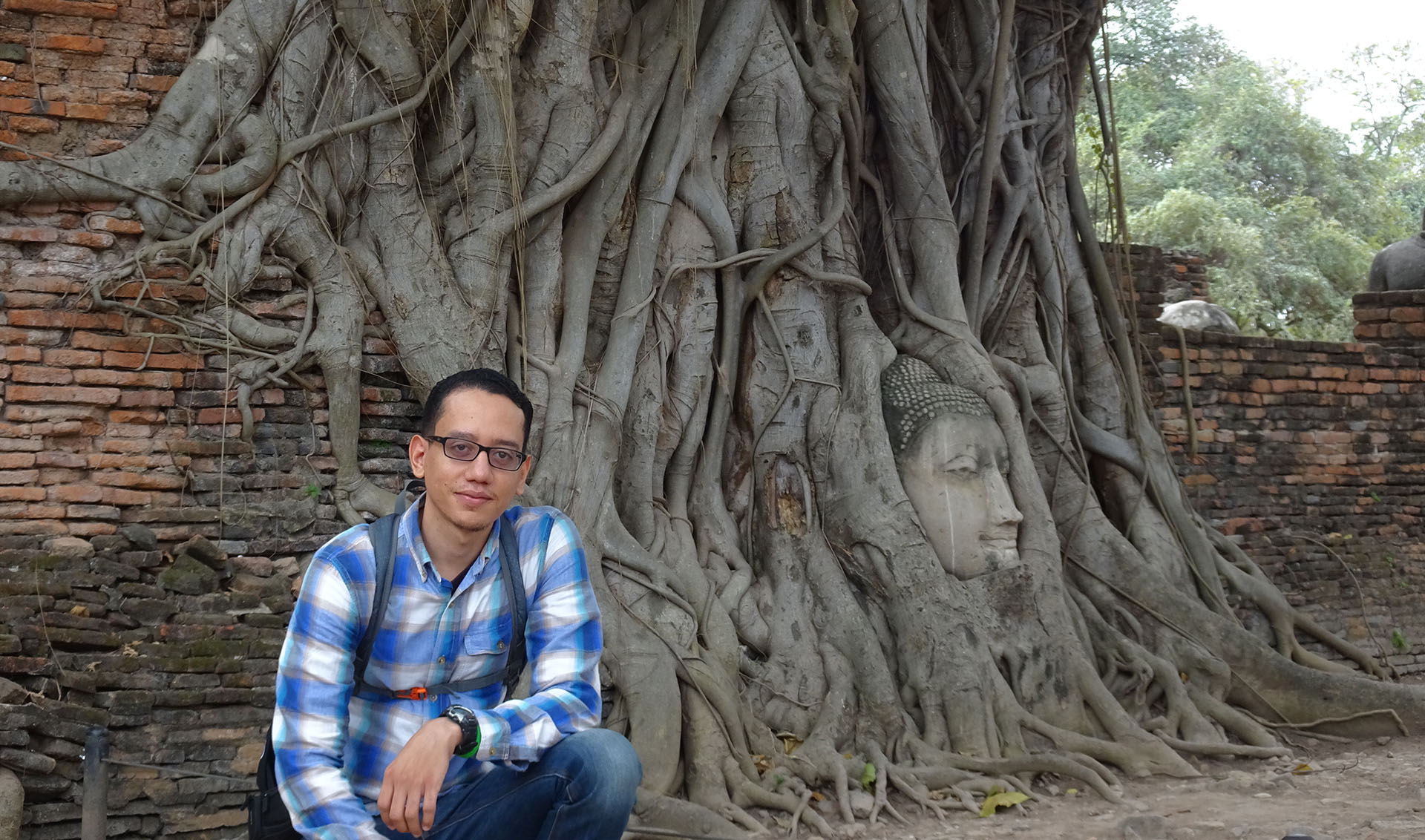
Across the road from Wat Ratchaburana stands Wat Mahathat, which tradition holds was built by King Ramesuan in the late fourteenth century. The central structure is one of the most impressive in the old city.
In the seventeenth century part of the top fractured, and it was rebuilt some four meters taller. Later it collapsed again — this time only the corners survived. In the 1950s a secret passage was found inside the ruin, containing gold jewelry, a gold casket holding relics of the Buddha, and very fine tableware.
The head entangled in tree roots here is one of the iconic images of Thailand. Nobody knows for certain how it came to be caught that way. The prevailing theory is that a looter was probably trying to carry the head off, and for some reason tried to hide it, or simply could not get it beyond the walls — after which it was forgotten and nature did the rest.
Many Buddha sculptures were beheaded during the sackings. This was relatively common in the raids carried out by the Burmese, and also by opportunistic Thais taking advantage of a wretched situation.
2. Wat Phra Si Sanphet
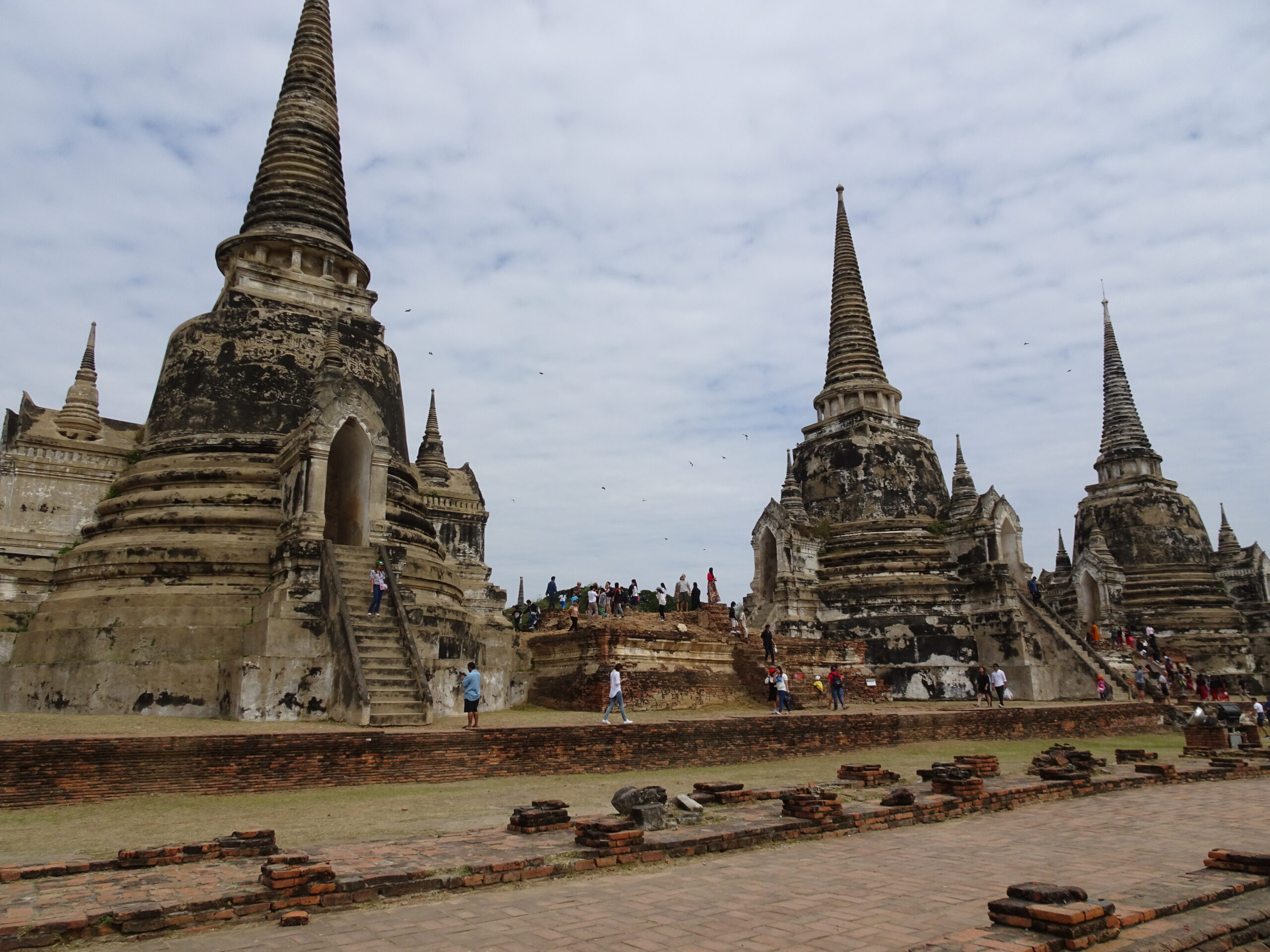
One of the most historically important temples in Ayutthaya, also known as the King’s Temple. It consists of three great stupas and several smaller ones.
Two of the large stupas were built in the late fifteenth century by King Ramathibodi II, to hold the ashes of his father and his elder brother. The third was built after the king’s own death, on the order of his son and successor, and his ashes were placed in it.
All three were extensively looted by Burmese invaders. Several of the smaller stupas survived intact because they were hidden, and they held Buddha statues in bronze, crystal, silver and gold — now in the National Museum in Bangkok.
The great palace of Wang Luang stood on this site as well, to the left. Only its ruined foundations remain; the palace was completely destroyed by the Burmese.
3. Wat Chaiwatthanaram
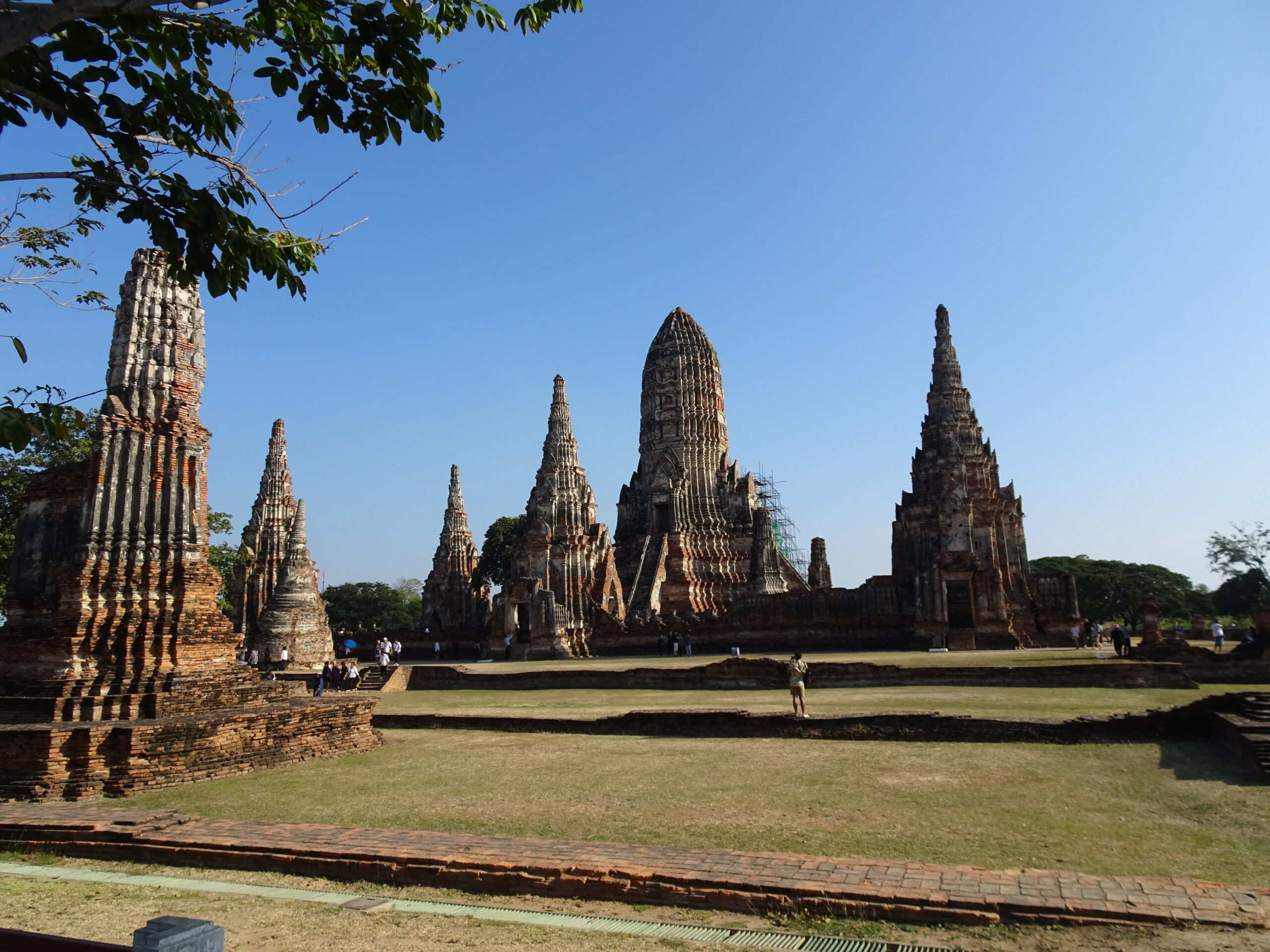
Built to mark the reign of King Prasat Thong. The main prang symbolizes Mount Meru, part of Buddhist cosmology, and is surrounded by numerous Buddha sculptures — the great majority of them beheaded.
It is believed that extremely valuable Buddhist relics were deposited in this stupa.
4. Wat Phanan Choeng
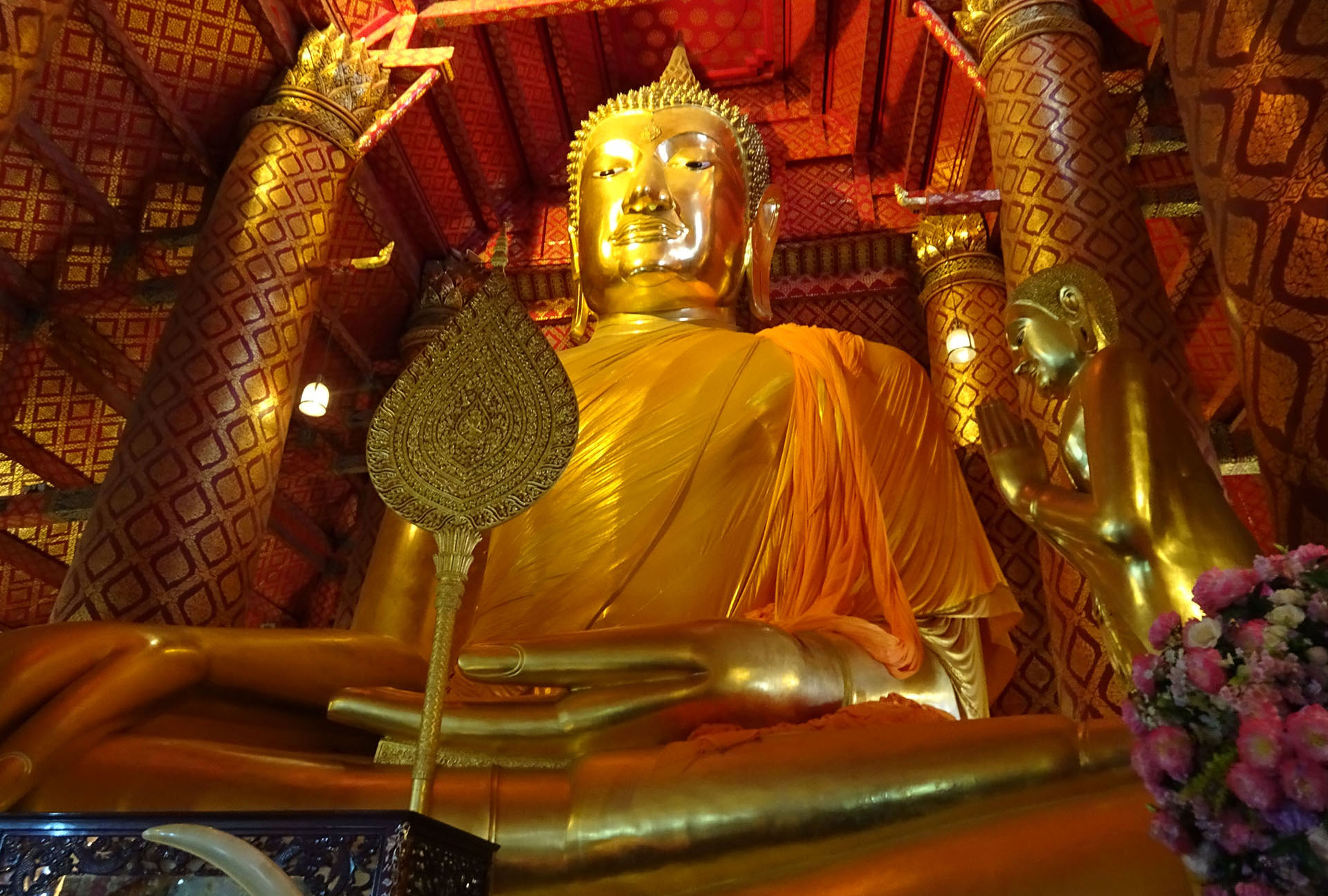
This temple holds a great Buddha image — the oldest in Ayutthaya — dating from the fourteenth century.
How Buddhism reached Thailand
Roughly two hundred years after the Buddha’s death, the great Buddhist emperor Asoka organized small monastic groups to travel through the known world, sharing the Dhamma with anyone interested in learning it. One of these was sent to the region of Southeast Asia known as Suvannabhumi, an area that included what is now central Thailand.
The Theravada tradition re-established itself with the rise of the independent Thai kingdom of Sukhothai in the thirteenth century. The first king of Sukhothai built a monastery for a community of forest monks trained in Sri Lanka, who at that time had been living in the south of the country. That marked the beginning of a close relationship between the Thai nation and Theravada Buddhism, which continues today.
What has crept in
Buddhism is not by nature a persecuting religion. It has never sought to convert or eliminate its rivals, but rather to live alongside them in peace.
Over the centuries in Thai communities, that has produced accommodations with Indian Brahmanism and with animist practice. A number of non-Buddhist beliefs have slipped into the Buddhist mainstream as a result.
Buddhism has also had to face the large social and cultural changes brought by a modern economy. Worldly values have insinuated themselves into various parts of the Buddhist community. Some monasteries have grown rich and have not used that wealth wisely. So it is common enough to see a mixture of popular culture, superstition, consumerism and materialism sitting in open conflict with the spirit of the teaching.
Some examples of these beliefs:
- Protective amulets
- Divination — of lottery numbers, and of the future generally
- Donations, strictly monetary, to improve karma and grant wishes
- Blessings for new businesses and homes
- Spirit houses at businesses and homes
- Incense and prayers before images of the Buddha, Hindu gods and spirits, for good fortune and protection
- Ordaining as a monk for only a few days, purely for the good karma of one’s parents
- A disproportionate belief in ghosts and other superstitions
None of this is offered as a reason to be sniffy about Thai Buddhism, which sustains a living monastic tradition that most of the world does not have. It is offered because the ruins and the amulet stalls are the same religion at different distances from its own center, and Ayutthaya is a good place to notice that.